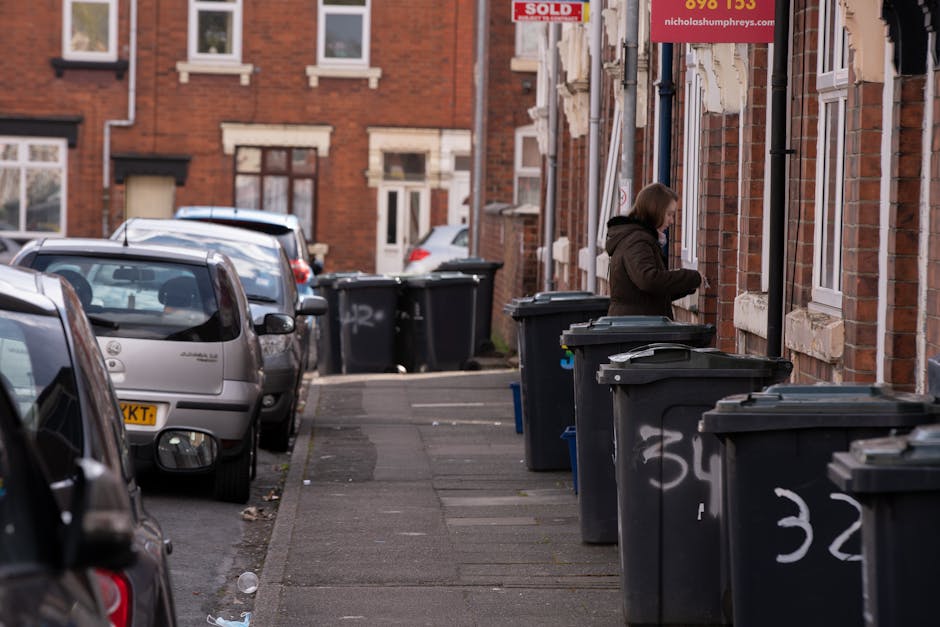
Rubbish clearance for homes on Chiswick High Road W4

If you live on or near Chiswick High Road, you already know the rhythm of the place: busy pavements, tight access, parked cars, basement flats, converted terraces, and the occasional "where on earth do we put all this?" moment after a clear-out. That is exactly where rubbish clearance for homes on Chiswick High Road W4 becomes genuinely useful. Whether you are emptying a loft, clearing out renovation debris, replacing old furniture, or simply trying to get your home back under control, the right waste removal approach can save time, reduce stress, and keep everything moving smoothly.
This guide walks through the practical side of home rubbish clearance in W4: what it involves, how the process usually works, what options make sense in different situations, and the common mistakes people make when access, volume, or waste type are not properly thought through. It is written for real homes, not idealised ones. Because, let's face it, a narrow mews entrance and a hallway full of broken shelves is not the same as a neat suburban driveway.
By the end, you will have a clearer sense of the best route for your property, your timeline, and your budget. A bit of clarity goes a long way.
Why Rubbish clearance for homes on Chiswick High Road W4 Matters
Home rubbish clearance sounds simple until you try to do it in a dense, well-used London street. Chiswick High Road has a mix of residential buildings, flats above shops, period homes, and properties with awkward access. That changes everything. A straightforward load-out can become messy if you have to carry waste through shared hallways, time delivery around traffic, or avoid blocking neighbours and footpaths.
Good rubbish clearance matters because it is not only about removing clutter. It is about keeping your home safe, usable, and compliant with how waste should be handled in the UK. Old furniture, broken appliances, renovation offcuts, garden debris, bags of general junk, and loft leftovers all build up fast. Once they do, they get in the way. You stop noticing the space because the clutter becomes the space. Sound familiar?
There is also the practical London factor. On busy roads, access and timing are often the difference between a job done neatly and a job that causes faff. A properly planned clearance avoids wasted trips, awkward lifting, and the kind of last-minute panic that tends to happen when a sofa will not fit down the stairs. Not glamorous, but very real.
If your waste is mixed, bulky, or too much for your own car runs, a specialist service is usually the better move. It can also be the safer move, especially when items are heavy, sharp, dusty, or simply awkward to handle alone. For some homeowners, this is where a broader service like rubbish removal or a planned house clearance makes more sense than trying to tackle everything one bag at a time.
How Rubbish clearance for homes on Chiswick High Road W4 Works
At its core, the process is about identifying the waste, estimating the volume, and choosing the method that fits your property and your schedule. For many homes, that starts with a quick assessment: what needs removing, where it is located, and whether access is straightforward. A ground-floor flat with rear access is one story. A top-floor conversion with narrow stairs is another entirely.
Most clearance jobs follow a fairly similar pattern:
- Sort the waste into general rubbish, reusable items, recyclable materials, and any restricted or hazardous items.
- Choose the collection method based on volume, access, and urgency.
- Book the service for a time that works around parking, neighbours, and building access.
- Load the waste safely and efficiently.
- Transport and process it through appropriate recycling or disposal routes.
For some homes, a skip is the best option. For others, a collection team removing everything for you is simpler. In tighter streets or where parking is difficult, a wait-and-load skip hire arrangement can be helpful because the skip does not stay on the road for long. If speed matters, you might look at same-day skip hire or direct man and van clearance depending on what you are clearing and how quickly it needs to go.
One thing people often overlook is waste type. Not all rubbish can be treated the same way. Household junk, garden waste, electrical items, furniture, and building rubble each need different handling. If you have mixed waste, it helps to be upfront about it from the start. That saves time later. And yes, it saves money too, usually.
Key Benefits and Practical Advantages
There are several reasons local homeowners choose professional clearance rather than making repeated trips to the tip or stacking bags by the door and hoping for the best.
- Less disruption - the work gets done in one go instead of dragging over several weekends.
- Better access planning - useful on roads where parking is tight or where there is limited front space.
- Safer lifting - heavy furniture and awkward waste are handled with proper care.
- Cleaner recycling outcomes - mixed waste can be sorted more effectively when collected properly.
- More usable space - you get the room back quickly, which is oddly satisfying.
- Useful for urgent jobs - especially after moves, repairs, or last-minute clear-outs.
There is also a mental benefit people do not mention enough. Clearing a home is rarely only about waste. Often it is about moving on from a renovation, an inherited property, a long-overdue declutter, or the end of a stressful chapter. Once the piles start leaving, the house feels different. Calmer, somehow.
If you are deciding between methods, it may help to compare the level of effort you want to spend. A do-it-yourself approach can work for a few bags. Beyond that, the convenience of a planned collection or a domestic skip often wins out. For larger household projects, domestic skip hire can be an efficient choice, especially if you are filling waste steadily over a few days.
Who This Is For and When It Makes Sense
This type of service is not just for major house moves. In fact, a lot of the requests come from ordinary, everyday situations. A few examples:
- Families clearing out lofts, sheds, or spare rooms
- Landlords preparing a property for new tenants
- Homeowners replacing sofas, mattresses, or appliances
- People dealing with the aftermath of a renovation or DIY project
- Residents in flats who need waste removed from communal spaces without causing a nuisance
- Anyone dealing with bulky items they cannot safely move themselves
It also makes sense when the waste is mixed and you do not want to spend time separating it into several trips. If the job includes old furniture, broken cabinets, bagged rubbish, and a fridge that has seen better days, a structured clearance solution is usually less painful than trying to improvise.
For specific item types, there are often dedicated solutions that are easier than one-size-fits-all clearance. For example, old white goods can be handled through fridge and appliance removal, while old beds and lounges may be better matched to mattress and sofa disposal. If the clear-out includes cupboards in the roof space or the garage, garage and loft clearance can be a more focused option.
Truth be told, most people wait a bit too long before booking. They keep shifting things from one corner to another, and then the hallway starts looking like a storage unit. If that is where you are now, you are probably already past the "maybe later" stage.
Step-by-Step Guidance
Here is a practical way to plan rubbish clearance without overcomplicating it.
- Walk through the property
Look at every room, hallway, cupboard, and outdoor area where waste has built up. Be honest about the full volume, not just the obvious pile in the corner. - Separate the items by type
Group general rubbish, furniture, electricals, recyclable materials, garden waste, and anything hazardous. If you are unsure, keep it aside until checked. - Measure access
Check stairs, door widths, parking options, loading distance, and whether a vehicle can stop nearby. This is especially important on busier sections of Chiswick High Road. - Decide on the right service
Small amounts may suit a collection load. Larger jobs may need skip hire, while awkward access may favour grab hire services or a man-and-van collection. - Check for restricted items
Hazardous materials should not be mixed in casually. If you have paint, chemicals, gas cylinders, or anything similar, speak clearly about it before booking. - Confirm the loading plan
Know what goes first, who is moving what, and how long the job should take. Small planning decisions save a lot of standing around later. - Book with a realistic time window
Rubbish clearance on a busy road may need a little flexibility. Traffic and parking do not always behave kindly.
If you are choosing a skip, it helps to read the details on what can go in a skip before booking. That one page alone can prevent a lot of confusion. And if price planning matters, comparing skip sizes and prices gives you a more realistic sense of the options.
Small tip, but useful: take a few photos before you book. Nothing fancy, just wide shots of the items and the access route. It makes quoting easier and helps avoid surprises. Surprises are overrated in rubbish clearance.
Expert Tips for Better Results
The difference between a smooth clearance and a stressful one is often in the small details. A few practical habits go a long way.
- Leave a clear route from the waste area to the exit. Even removing a couple of boxes from the hallway helps.
- Disassemble bulky items where it is safe to do so. A flat-pack wardrobe is still annoying, but less annoying than one left intact.
- Keep recyclables separate if you can. Cardboard, metal, and clean wood are easier to manage when not mixed with everything else.
- Label questionable items so nobody has to guess what they are dealing with on the day.
- Be realistic about volume. People often underestimate by a fair bit, especially with attic or garage contents.
- Plan around neighbours if access is shared. A little courtesy goes a long way on residential streets.
For tighter properties, enclosed options may also be worth considering. An enclosed and lockable skip hire setup can help when you want better control over contents or when the waste sits outside for a short period. That can be useful near busy frontages where tidiness matters.
One more thing: if you have a job that needs to happen quickly because a room is being redecorated or a move-out is looming, do not wait until the day before. The calendar, as ever, has no sympathy.
Common Mistakes to Avoid
Most waste clearance headaches come from a handful of avoidable mistakes. You do not need perfection, just a bit of forethought.
- Underestimating the volume - a few bags become ten bags very quickly.
- Ignoring access issues - narrow stairs, parking restrictions, and front-door bottlenecks matter more than people expect.
- Mixing prohibited items - this creates delays and can complicate disposal.
- Booking the wrong type of service - for instance, needing a house clearance but arranging a method better suited to builder's waste.
- Leaving sorting until the last minute - that is how a simple day turns into a sweaty afternoon of "where does this go?"
- Forgetting about permits - if a skip needs to sit on the road, permits can become relevant.
A lot of these problems are not expensive in themselves; they are just annoying. But annoyance grows fast when a clearance is already tied to a deadline. Best avoided.
If your job involves a skip on a public road, make sure you understand the local requirement for permissions. Pages like skip hire permits and skip permits are useful starting points if you are comparing options and trying to avoid access issues.
Tools, Resources and Recommendations
You do not need special equipment to begin planning a clearance, but a few practical tools help:
- Measuring tape for doorways, stair turns, and access gaps
- Mobile phone photos for quoting and planning
- Strong gloves for basic sorting before collection
- Marker pens or labels to identify what stays, what goes, and what needs checking
- Dust sheets or covers if you are moving waste through living spaces
- Basic floor protection if heavy items need to be shifted downstairs
For larger or mixed loads, it is worth comparing collection methods rather than defaulting to one. A direct clearance service can suit fast, single-pickup jobs. A skip is better for ongoing work over several days. If the load is heavy rubble or soil, you may want to look at grab lorry hire or muck away services for the heavier end of the spectrum.
On the sustainability side, it is sensible to ask how recyclable material is separated. If environmental handling matters to you, the page on waste recycling services is a useful read, as is recycling and sustainability. Not because it sounds good in a brochure, but because it actually affects what happens after collection.
If you want to understand the business behind the service, you can also review about us and insurance and safety. Those pages help build confidence before you book, which is fair enough when somebody is coming onto your property to move bulky waste.
Law, Compliance, Standards, or Best Practice
Rubbish clearance is not just a convenience service. It sits inside a wider framework of UK waste-handling best practice. You do not need to memorise legislation to make good decisions, but a few principles are worth keeping in mind.
First, waste should be handled by a responsible operator. If you are paying someone to take rubbish away, you want confidence that it is being transported and processed properly. Responsible disposal is not just a nice extra; it is part of doing the job properly.
Second, hazardous items need special care. Paints, chemicals, certain electronics, and other restricted materials should not be mixed with ordinary household waste unless the provider explicitly confirms they can accept them. When in doubt, ask first.
Third, road placement matters. If a skip or vehicle needs to use the public highway, permissions may be relevant. It is better to check in advance than to assume it will be fine and hope for the best. Hope is not a permit.
Fourth, privacy matters too. In homes, clearances sometimes involve documents or items containing personal information. If that is the case, a dedicated option such as confidential shredding is more appropriate than throwing everything into mixed waste.
As best practice, it is sensible to choose a provider that explains what can and cannot be taken, how items are processed, and what happens if access is limited on the day. Clear communication is usually the mark of a reliable operation.
Options, Methods, or Comparison Table
The right clearance method depends on access, waste type, urgency, and how hands-on you want to be. Here is a simple comparison to help you think it through.
| Method | Best for | Advantages | Things to watch |
|---|---|---|---|
| Rubbish removal | General household clutter, bulky items, mixed loads | Fast, convenient, minimal effort from the homeowner | Needs clear access and accurate description of waste |
| Domestic skip hire | Ongoing clear-outs, DIY jobs, steady waste build-up | Flexible, good for multi-day projects | May require space or a permit if placed on-road |
| Wait-and-load | Tight streets, limited parking, quick loading jobs | Very useful where leaving a skip is impractical | Needs organised loading and a clear time window |
| Grab hire | Heavy mixed waste, soil, rubble, bulkier external loads | Efficient for larger volumes and awkward materials | Access and placement still need planning |
| Man and van | Smaller clearances, room-by-room decluttering | Simple, flexible, usually very practical for homes | May be less suited to very large renovation waste |
There is no single best answer. A top-floor flat with a pile of old furniture may suit a different approach from a family home clearing builders' debris after a bathroom refit. If you are doing refurbishment work, the more tailored services such as builders waste removal, builders skip hire, or construction waste disposal may fit better than a standard household clear-out.
Case Study or Real-World Example
Here is a realistic example based on the sort of job many households on Chiswick High Road face.
A couple in a first-floor flat wanted to clear out a spare room before starting a renovation. The room held old shelving, a broken sofa bed, bags of clothing, flat-pack packaging, an old TV unit, and some dusty odds and ends from the loft hatch area. At first glance, it looked manageable. Once they started moving it, the narrow stairwell told a different story.
They could not safely carry the larger pieces downstairs without snagging walls and creating a mess. So they paused, took photos, checked the access route, and chose a collection method that suited the building better than a straightforward DIY run. The bulky furniture was removed first, then bagged waste followed. A separate plan was made for the old appliance, which needed the right handling rather than being folded into the rest of the load.
The main lesson? The problem was not the amount of waste alone. It was the combination of access, weight, and timing. Once those were understood, the whole job became much easier. It was still a bit dusty, still a bit chaotic, but manageable. That is usually the sweet spot.
For homeowners dealing with larger internal clearances, a service such as house clearance or even garage and loft clearance can be more efficient than trying to book separate removals for every item. One coordinated plan, less hassle. Simple as that.
Practical Checklist
Use this before booking your clearance.
- Have you identified every area that needs clearing?
- Do you know roughly how much waste there is?
- Have you separated general rubbish from special items?
- Are any items hazardous, confidential, or restricted?
- Is access from the property to the street clear enough?
- Will parking or loading space be a problem?
- Do you need a skip, a collection crew, or a mixed solution?
- Have you checked whether a permit might be needed?
- Are there recyclable items you want handled carefully?
- Have you chosen a convenient time when the property is accessible?
Quick expert summary: if you are working with bulky household waste on a busy stretch of Chiswick High Road, the best results usually come from early planning, honest volume estimates, and choosing a method that matches the access, not just the amount of rubbish. That is the bit people miss most often.
For a straightforward next step, many homeowners start by checking pricing and quotes or heading straight to book online once they know what they need. If you want to ask a question first, the contact us page is there too. Clear enough, really.
Conclusion
Rubbish clearance for homes on Chiswick High Road W4 is really about making a busy, awkward, lived-in space feel manageable again. Sometimes it is one room. Sometimes it is a whole property. Sometimes it is just a mountain of old furniture that has overstayed its welcome.
The important thing is to match the service to the job. Think about access, waste type, timing, and how much lifting you want to do yourself. If you take those four things seriously, the process becomes far less stressful and much more efficient.
And honestly, there is a certain relief in seeing a room empty again, with daylight back on the floorboards and no more boxes leaning in the corner. Small win, but a real one.
Get a free quote today and see how much you can save.
When the clutter is gone, the home feels lighter. That is usually when people realise they were carrying more than just rubbish.
Frequently Asked Questions
What does rubbish clearance for homes on Chiswick High Road W4 usually include?
It usually includes the removal of household junk, bulky items, old furniture, bagged waste, and in some cases light renovation debris. The exact scope depends on the provider and the type of waste involved.
Is a skip or a collection service better for a home on Chiswick High Road?
It depends on access, volume, and timing. A skip works well for longer clear-outs or DIY projects. A collection service is often easier for homes with limited space, tight parking, or mixed bulky items.
Do I need a permit for a skip in W4?
If the skip will be placed on a public road, a permit may be needed. If it stays fully on private land, that is often different. It is always best to check before booking rather than assuming.
Can furniture and appliances be removed together?
Often yes, but appliances may need separate handling depending on what they are and whether they contain restricted components. It is wise to mention items like fridges, freezers, and large electricals in advance.
How quickly can home rubbish be cleared?
In many cases, quite quickly. Some jobs can be arranged for the same day or next day if availability allows, especially when the waste is clearly described and access is straightforward.
What should I do before the team arrives?
Clear a route to the items, separate anything you want to keep, and flag any awkward or restricted waste. A few minutes of preparation can save a surprising amount of time.
Can I put mixed waste in one load?
Often yes, but the way it is handled may depend on the service and the waste type. Mixed waste should always be described clearly so it can be processed correctly.
Is rubbish clearance suitable for flats as well as houses?
Yes. It is often especially useful for flats, upper floors, and converted properties where access is tight and carrying items down stairs is the main challenge.
What happens to the waste after collection?
Responsible providers usually sort waste for recycling, recovery, or disposal depending on the material type. If recycling is important to you, ask how the waste stream is managed.
How do I know if I need house clearance rather than standard rubbish removal?
If you are clearing most of a property, or a full set of rooms with furniture and household contents, house clearance is often the better fit. If it is just a smaller load or a few bulky items, rubbish removal may be enough.
Can I get rid of a mattress or sofa separately?
Yes, and sometimes that is the neatest option. Dedicated removal for these items can be simpler than including them in a larger mixed job.
What if I am not sure how much waste I have?
That is very common. Take a few photos and describe the items as best you can. A rough estimate is usually enough to start the conversation, and it can be refined later.
Are there any items I should never leave to the last minute?
Yes: appliances, hazardous waste, confidential documents, and anything heavy or difficult to move. These can affect planning, access, and the method used, so they are best flagged early.